Building Synergy Between Direct Sales and Cloud Marketplace Strategy
In today’s digital-first world, the way organizations buy and sell technology is changing fast. Cloud Marketplaces like AWS, Azure, and Google Cloud have become a key channel for software vendors to accelerate growth, streamline procurement, and reach enterprise customers faster. But here’s the catch — success on these platforms isn’t just about listing your product. It’s about ensuring your sales teams are aligned with the marketplace motion.
When sales and marketplace strategies work in harmony, you unlock faster deal cycles, new revenue streams, and happier customers. Let’s explore how you can make that happen.
1. Reframe the Marketplace Narrative for Sales Teams
Your sellers might see cloud marketplaces as competition or a complex layer added to their process. That perception needs to change. The first step is to educate your teams that marketplaces aren’t replacing them — they’re empowering them.
Explain how marketplace transactions can help close deals faster by leveraging pre-approved budgets, existing cloud commitments, and simplified procurement. When sellers understand that a marketplace deal can help them hit quota sooner, you’ll have their attention.
2. Create Clear Incentive Structures
Sales incentives are the heartbeat of alignment. If marketplace-sourced deals aren’t recognized or rewarded, sellers won’t prioritize them.
To drive adoption:
- Ensure marketplace transactions count towards quota attainment.
- Offer accelerators or bonuses for marketplace deals.
- Celebrate early wins — recognition drives momentum.
This reinforces that the marketplace isn’t just a backend channel; it’s a strategic route to revenue.
3. Integrate Marketplaces into Your Sales Workflow
Alignment thrives when the process feels seamless. Integrate marketplace options directly into your CRM workflows, pricing tools, and deal registration processes.
For example:
- Enable reps to view eligible customers with cloud credits in Salesforce.
- Train them to use marketplace private offers as a negotiation lever.
- Equip them with quick guides and templates for marketplace quotes.
The goal? Make marketplace selling feel like second nature – not a separate motion.
4. Partner with Cloud Providers Strategically
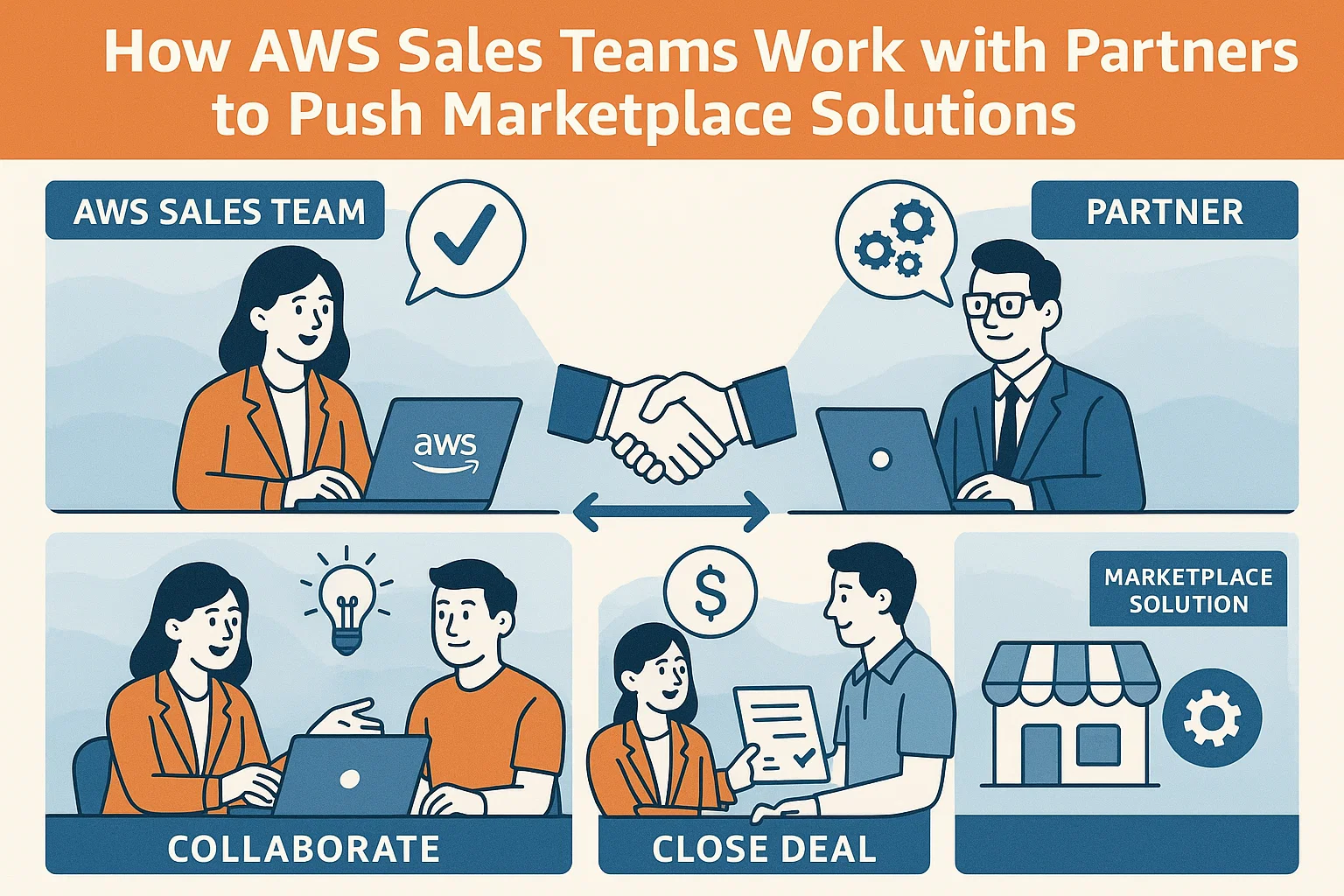
Sales alignment also means tapping into the co-sell potential with cloud partners. By collaborating with AWS, Azure, or GCP reps, your sales team can co-sell to mutual customers, leveraging the provider’s relationships and procurement advantages.
When your sellers see that cloud partners can help open doors and shorten cycles, they’ll start driving deals through the marketplace, not around it.
5. Track, Measure, and Iterate
Finally, create visibility into what’s working. Measure metrics such as:
- Marketplace-attributed revenue
- Deal velocity compared to traditional routes
- Seller adoption rates
Use this data to refine enablement, incentives, and partner engagement over time. Marketplace alignment isn’t a one-off project — it’s an evolving strategy that matures as your business scales.
Conclusion
The rise of cloud marketplaces signals a shift in how enterprises buy, and how sellers need to adapt. By aligning sales teams with marketplace motion, organizations can transform potential friction into competitive advantage.
In essence, it’s not about changing what your sellers do — it’s about evolving how they do it. The companies that get this alignment right will lead the next wave of B2B cloud growth.